From foundations to frontier compounds
No supplement is “recommended to everyone” without context. The safest editorial structure is food and deficiency correction first, targeted supplementation second, and experimental compounds in a clearly separated frontier zone.
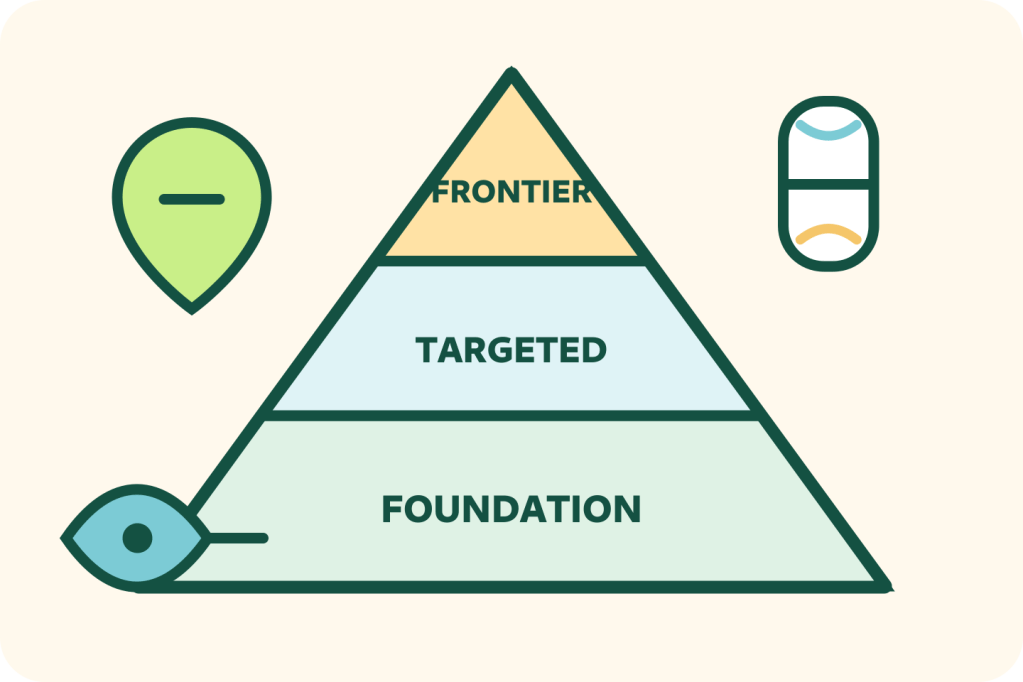
A – Foundation candidates: broad relevance, still individualized
These are not automatic daily pills. They are areas where diet, lifestyle or a documented gap can justify a relatively simple intervention.
Omega-3
Default: oily fish or other appropriate food sources. Consider a supplement when dietary intake is low or a clinician recommends it.
Brain-health rationale: DHA is a structural fatty acid; public commentators often discuss EPA/DHA. Evidence does not make high-dose fish oil universally necessary.
Watch: anticoagulants, bleeding risk at high doses, GI effects and product oxidation.
Vitamin D
Default: sunlight, diet and risk assessment. Supplement when deficiency risk or measured status supports it.
Budget logic: a one-time test or clinician review may be cheaper than years of unnecessary high-dose use.
Watch: excessive dosing, calcium disorders, kidney disease and overlapping multivitamins.
Creatine monohydrate
Default: a well-studied sports-nutrition option with possible cognitive relevance in some contexts, but not a universal brain-health requirement.
Budget logic: plain monohydrate is usually more economical than branded blends.
Watch: kidney disease, dehydration misconceptions, weight gain from water and individual hair-loss concerns that remain scientifically unsettled.
Magnesium or a basic multivitamin
Default: fill a dietary gap, not duplicate several products. A multivitamin, greens powder and fortified drink can silently stack the same nutrients.
Budget logic: compare the label against food intake and existing products before adding another “all-in-one”.
Watch: diarrhoea, kidney disease, drug interactions and excessive fat-soluble vitamins.
B – Targeted: use a condition, diet or biomarker as the entry ticket
| Candidate | Possible trigger | Why supervision matters |
|---|---|---|
| Iron | Documented deficiency, blood loss or clinician-defined need | Unnecessary iron can be harmful; the cause of deficiency matters. |
| Vitamin B12 / folate | Low levels, vegan diet, malabsorption, certain medicines | High folate can mask B12 deficiency; neurological symptoms need assessment. |
| Higher-dose omega-3 | Specific cardiovascular indication or clinician-guided target | Dose, formulation and medicines change risk. |
| Melatonin | Defined circadian or short-term sleep problem | Timing matters; it can cause daytime effects and interact with medicines. |
| Probiotic | Specific GI goal, antibiotic context or clinician recommendation | Strain and indication matter; “more strains” is not automatically better. |
| Condition-specific botanicals | Clear goal and interaction review | Quality, liver effects, sedation and medicine interactions vary substantially. |
C – Frontier: interesting hypotheses, weak portability
These compounds appear in longevity media or public routines, but long-term human outcome evidence, product quality and legal status can be uncertain.
NMN / NR
NAD-related compounds are biologically interesting, but a change in a biomarker is not proof of longer healthy life. Regulatory status and product quality vary by country.
Resveratrol
Popularized in longevity discussions, with uncertain real-world benefit and possible interactions. Do not infer a proven synergy from influencer stacks.
Spermidine, fisetin and “senolytic” stacks
Early-stage or mixed evidence; dosing schedules and long-term harms are not settled for consumer self-experimentation.
Lion’s mane, alpha-GPC and nootropic blends
Some plausible mechanisms and limited studies, but product variability and outcome claims often exceed evidence.
Berberine and glucose-lowering botanicals
Biologically active and capable of side effects and drug interactions. “Natural” does not mean mild.
Large creator stacks
The combined interaction burden is rarely tested. Copying twenty ingredients also destroys the ability to identify what helped or harmed.
Separate category
Prescription and procedural longevity interventions are not supplements
Metformin, rapamycin, acarbose, hormones, peptides, prescription stimulants and other off-label interventions require a prescriber, a legitimate indication or research protocol, baseline testing and adverse-effect monitoring. They should never appear inside a consumer “supplement stack” table as if they were equivalent to fish oil or magnesium.
Budget comparison
All-in-one powder versus a modular basket
All-in-one
- Convenient single routine
- May include greens, vitamins, enzymes and probiotics
- Often expensive and may use proprietary blends
- Harder to remove one ingredient
Modular
- Buy only the demonstrated gap
- Lower-cost German retailer options may reduce monthly spend
- Easier to pause one item and identify side effects
- Requires label checking to prevent duplication
Starter editorial angle from the supplied GuideFinances notes: compare a basic omega-3/magnesium/multivitamin basket with premium greens products, then add probiotics or greens only when they solve a defined problem. Verify every current product label and price before publishing.
Complements – Time for intake
Morning
Greens Powder (Nature Love or Doppelherz): Supports digestion, energy, and antioxidant load to start the day; vitamin absorption aided by food.
Probiotic (Nature Love Probiona or Mivolis Darm Plus): Most effective before or with first meal, helps colonize gut during daytime peristalsis; empty stomach enhances delivery.
NMN + Resveratrol (if included) NMN boosts NAD+ levels (non-core stack): Best in early day to sync with circadian NAD cycles. Resveratrol works synergistically and requires fat → take with breakfast or greens+oil/yogurt mix.
Midday
Multivitamin (Doppelherz A-Z + K2/D3): Enhanced absorption of fat-soluble vitamins (A, D, E, K) when taken with a meal that contains fat; avoids nausea in sensitive individuals.
Omega-3 (Mivolis): Best absorbed with fat-containing meal (lunch or dinner). Minimizes reflux/fishy aftertaste when split between meals.
Night
Magnesium (Mivolis 400) : Enhances muscle relaxation, supports deep sleep, and reduces cortisol. May aid in blood pressure regulation overnight.
What the reference figures are useful for
| Reference | Useful lens | Editorial caution |
|---|---|---|
| Peter Attia | Framework, individual need, exercise and measurable risk | Do not turn nuanced paid/member content into a universal supplement list. |
| Andrew Huberman | Tool-oriented explanations of sleep, light, omega-3 and creatine | Podcast discussion is not personalized medical advice; sponsorships must be disclosed. |
| Tim Ferriss | Minimum effective dose and structured self-experimentation | Older posts and sponsor reads are not current clinical recommendations. |
| Bryan Johnson | Systematic routine, measurement and protocol transparency | His high-resource programme is tailored and commercially connected to Blueprint products. |
| David Sinclair | Emerging aging biology and future research questions | His own official FAQ states that molecules beyond diet/exercise are not proven to extend healthy lifespan. |
| Ray Kurzweil | Technology-forward longevity thinking | Historical personal routines are not a current evidence standard. |
Safety and reference sources
NIH omega-3 fact sheet · NIH supplement fact sheets · FDA dietary supplement overview · Peter Attia supplement framework · Huberman brain-health episode · Bryan Johnson public protocol · Lifespan FAQ
Editorial and medical note: This content is for financial planning and general education. It is not medical advice, diagnosis, or treatment. “Lower risk” does not mean risk-free. Supplements, tests, wearables and off-label medicines can create interactions, false reassurance, incidental findings, privacy costs and follow-up expenses. Discuss material decisions with a qualified clinician who knows your history.

